
Asbestos Abatement and Environmental Remediation on Long Island and in New York City
Advanced Restoration removes asbestos and other hazardous building materials safely so your renovation or restoration can move forward.
Asbestos Abatement and Environmental Remediation
Finding out your home or building might contain asbestos can stop a project in its tracks. Maybe you pulled up an old floor during a renovation and found dark tiles underneath, or a burst pipe soaked the wrapped insulation in your basement, and now you’re wondering what you’re dealing with and whether it’s safe. Advanced Restoration provides asbestos abatement and environmental remediation for homeowners and business owners across Suffolk County, Nassau County, Queens, Brooklyn, and the Bronx, and our team has more than 30 years of experience in residential and commercial construction.
If you think you’ve found or disturbed asbestos, call us at (631) 422-2100. We’ll talk through what you’re seeing and help you figure out the safest next step.
What to do if you think you've disturbed asbestos
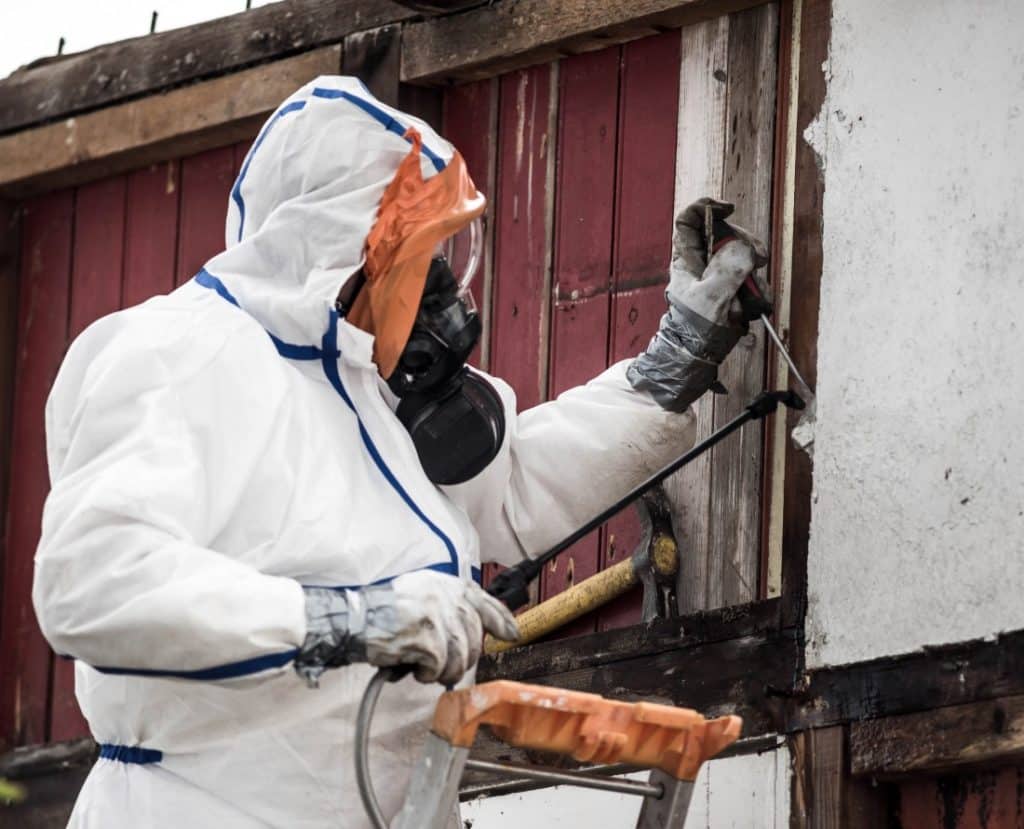
Asbestos is generally most dangerous when it’s damaged or disturbed, because that’s when its tiny fibers can get into the air and be inhaled. If you’ve broken, cut, or torn out a material you suspect may contain asbestos, stop work right away and keep everyone, including pets, out of the area. Close the doors to the room if you can, and turn off the heating and air conditioning so the system doesn’t spread dust through the rest of the building.
It’s also important not to sweep, dust, or vacuum the debris with a household vacuum, since that can push fibers further into the air. Leave everything where it is and call a professional who has the training and equipment to handle it safely.
Where asbestos is found in older Long Island and NYC buildings
Asbestos was used in American construction for most of the 20th century because it was strong, inexpensive, and resistant to fire. The EPA began restricting its use in the 1970s, but many homes and buildings built or renovated before the 1980s still contain it, and a lot of Long Island and New York City housing falls into that range.
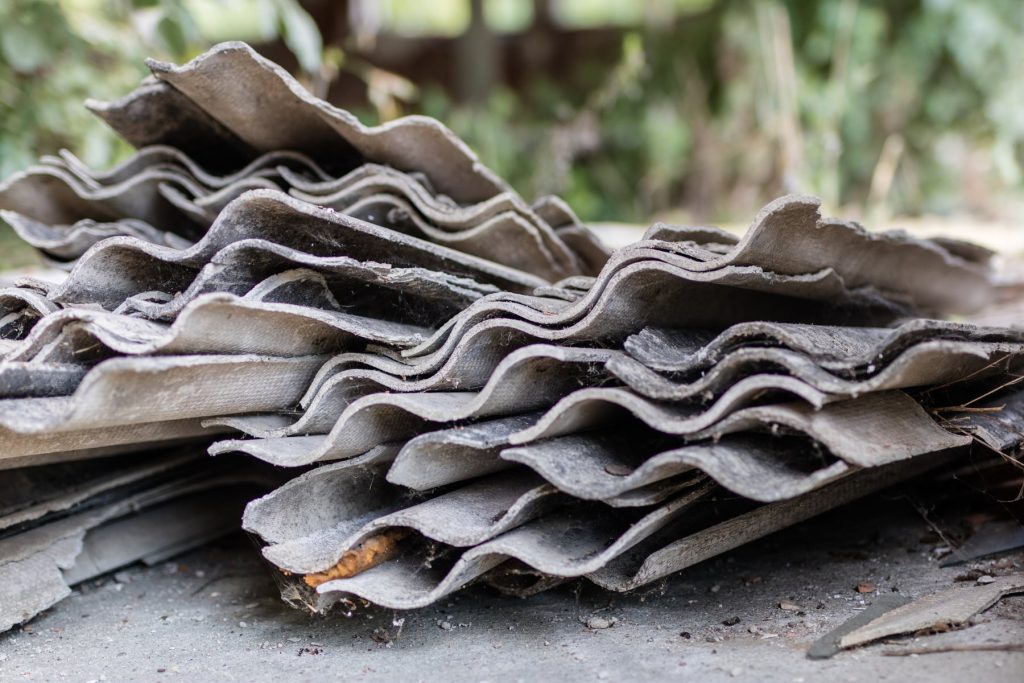
In basements, asbestos is often found in the insulation wrapped around old pipes, boilers, and ductwork. Older 9″ x 9″ floor tiles and the black adhesive underneath them are another common source, along with popcorn or textured ceilings, plaster, and drywall joint compound. In attics, it can show up in vermiculite insulation, and on the outside of a building it may be in roofing shingles, siding, or window glazing. Since asbestos can’t be identified just by looking at it, any suspect material needs to be sampled and confirmed by a lab before demolition or repair work begins.
Planning a renovation in an older home or building? Call (631) 422-2100 before you start tearing anything out.
How we handle asbestos abatement
Our team guides you through each stage of asbestos abatement and environmental remediation, from the initial assessment to the final walkthrough.
What to Expect
Dedicated project management, detailed documentation and coordinated service at every stage.
One Team, Start to Finish
Coordinated restoration, clear communication and a dedicated project manager.
01 / Identifying the material
Before any work begins, suspect materials are sampled and confirmed by independent, licensed professionals, as New York regulations require. This tells us exactly what we’re dealing with and where it’s located.
02 / Planning the work
Once the results are in, we review them with you and lay out the scope of the abatement, the schedule, and the cost, so you know what to expect before any material is touched.
03 / Setting up containment
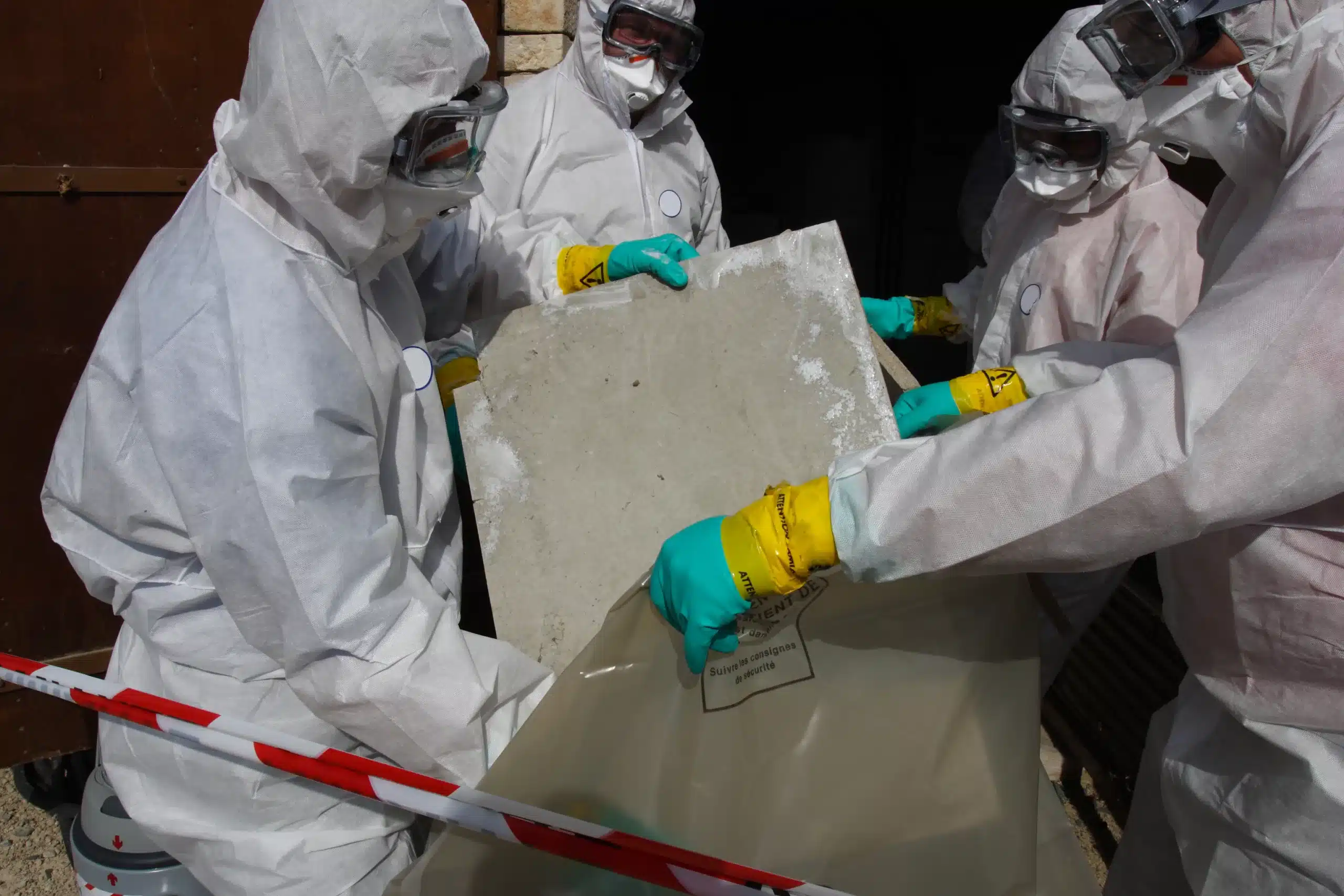
We seal off the work area with plastic sheeting and keep it under negative air pressure with HEPA filtration. This keeps asbestos fibers inside the work area and away from the rest of your home or building.
04 / Removing the asbestos safely
Our trained technicians wear proper protective equipment and keep the material wet while they work, which helps prevent fibers from becoming airborne. Each piece is removed carefully and sealed in labeled, leak-tight containers.
05 / Cleaning and clearance
After the material is removed, the work area is HEPA vacuumed and wet wiped from top to bottom. Independent air monitoring then confirms that the space is safe before the containment comes down.
06 / Disposal and rebuilding
The sealed waste is taken to an approved disposal facility, and once the area has been cleared, our construction team can rebuild whatever was removed.
Why asbestos often turns up during restoration work
Many restoration jobs in older homes run into asbestos without any warning. The water used to fight a fire can soak old pipe insulation, heat can damage ceiling materials, and tearing out wet flooring after a leak can disturb the adhesive underneath. When that happens, the restoration has to pause until the hazardous material is handled properly.
Because Advanced Restoration provides water damage restoration, fire damage restoration, and asbestos abatement, we can address the asbestos and keep the rest of your project moving without bringing in another company. You’ll work with the same team and the same project manager from start to finish.
Environmental remediation services
Asbestos is one of several hazards that can come up during a renovation or restoration project, and our environmental remediation work covers more than asbestos alone. We’re licensed by New York State for mold remediation, and we provide duct cleaning and decontamination for heating and cooling systems that have been carrying soot, mold spores, or debris through a building. We also handle demolition and removal of contaminated building materials, and we use air filtration during and after the work to improve indoor air quality.
Why Long Island property owners trust Advanced Restoration
Advanced Restoration is a locally owned company based in West Babylon, and we’ve been working on homes and commercial buildings across Long Island and New York City for more than 30 years. We’re certified, licensed, bonded, and insured, and we handle residential, commercial, and industrial projects of every size.
Personal Service Through Every Step
Because we provide abatement, restoration, and reconstruction under one roof, you won’t have to coordinate between separate contractors when asbestos turns up in the middle of a project.
Don’t take chances with asbestos. Call (631) 422-2100 or request service online to talk with our team about your project.
Asbestos Abatement and Environmental Remediation FAQs
You can’t tell just by looking at a material. If your home was built or renovated before the 1980s, materials like pipe insulation, floor tiles, and textured ceilings should be sampled and tested by a licensed professional before you disturb them.
Asbestos materials that are in good condition and aren’t being disturbed generally pose a lower risk. The danger comes when they’re damaged or crumbling, or when they’re cut, sanded, or torn out during repairs, because that releases fibers that can cause lung disease when they’re inhaled.
We strongly advise against it. Safe removal requires containment, protective equipment, air monitoring, and regulated disposal, and doing it the wrong way can spread fibers throughout your home and put your family at risk.
Smaller residential jobs, such as removing a section of pipe insulation, may only take a day or two. Larger projects, like removing flooring from several rooms or an entire ceiling, can take longer, and we’ll give you an extimated schedule along with your estimate.
Not always. Because the work area is sealed off and kept under negative air pressure, many families can stay in the unaffected parts of the home, although we may recommend staying somewhere else during larger projects.
Yes. We work with residential, commercial, and industrial clients throughout Long Island, Queens, Brooklyn, and the Bronx, and there’s no project too big or too small for our crew.
Serving Long Island and New York City
Suffolk County, Nassau County, Queens, Brooklyn, and the Bronx.
Let's Get Your Project Back on Track
Whether asbestos turned up in the middle of a renovation or during a water or fire restoration, it needs to be handled by people who do this work every day. If your home or business is on Long Island or in Queens, Brooklyn, or the Bronx, call Advanced Restoration at (631) 422-2100, and our team will help you take care of it safely.